
NASA Nebraska Space Grant
Students 2025-2026
The NASA Nebraska Space Grant is proud of our funded students. The profiles below highlight the excellent research and aerospace workforce development activities being undertaken in Nebraska this year. For 2024-2025 profiles, click here.
Heading 1

Ben Zwiener
University of Nebraska at Lincoln
Ben Zwiener is a graduate student working to complete his Masters in mechanical engineering with a minor in computer science in December of 2025. His research is towards developing a compliant variable stiffness mechanism designed to operate in the Cartesian directions. Potential of this device includes reducing energy use, wear, and enhanced safety features when implemented with robotic or other mechatronic systems. After graduating, Ben plans to explore career opportunities in the aerospace industry where he can further develop his expanding skillset and curiosity for mechanical engineering problems and robotic solutions.

Mariah Varquez
Creighton University
Mariah Jade Varguez is a first-year student at Creighton University pursuing a double major in Chemistry and Studio Art as well as a minor in Spanish. Jade is an honors scholar at Creighton and is also a part of the Creighton Pre-Professional Scholars Program on the pre-dentistry track. Her research focuses on creating glass using the sol-gel process, introducing ligand-bound silane precursors for metal-doping to make additively manufactured color-filtered glass materials.

Ethan Uphoff
University of Nebraska at Lincoln
Ethan Uphoff is a junior Mechanical Engineering student at the University of Nebraska–Lincoln. He conducts research on lunar rover wheel designs for surface compaction and site preparation to support in-situ resource utilization, in collaboration with Cislune and under the mentorship of Rachael Wagner. Supported by a NASA Nebraska Space Grant undergraduate internship with Cislune, he advanced ISRU technologies by applying cyclone separation methods to separate grain sizes of regolith. He is also a member of the UNL Lunabotics team, which designs and builds a lunar excavation rover to compete at NASA's Kennedy Space Center.

Thomas Brison
University of Nebraska at Lincoln
Thomas Brison is a second-year PhD student in the Department of Biology at the University of Nebraska–Lincoln. He recently earned his master’s degree in biology from the University of Nebraska at Omaha, where he built a strong foundation in environmental and biogeochemical research. His research focuses on hydrogen biogeochemistry in natural waters and soils, with particular relevance to NASA’s interests in planetary habitability, astrobiology, and Earth system science. By examining hydrogen-driven microbial and geochemical processes, Thomas’s work helps inform how life may persist in extreme or extraterrestrial environments and improves our understanding of biogeochemical cycles on Earth and beyond.

Sarah Trook
Western Nebraska Community College
Sarah Trook is a student and library technician at Western Nebraska Community College, majoring in Ecology and Biological Sciences. She is an active campus leader, serving as President of the STEM Club and Game Advisor for the 1-Up Club. She also served as the project manager during the construction of the STEM club aquaponics system. Before returning to school, Sarah worked in human services, gaining extensive experience in customer service, communication, and de-escalation. Now, she is channeling her lifelong passion for the ocean and the marshes of the East Coast into a career focused on ecological research and humanity’s place within the ecosystems of the natural world. Sarah is honored to join the NASA Space Grant Fellowship, where she aims to explore how we can better support life on Earth and in our ongoing journey into space using closed cycle terrestrial ecosystems.

Lauren Bertelsen
University of Nebraska at Omaha
Lauren Bertelsen is a graduate student researcher at the University of Nebraska at Omaha, where she is pursuing a Master of Science in IT Innovation after earning a Bachelor of Science in Computer Science. She conducts research under the guidance of Dr. Ada-Rhodes Wish, focusing on soft robotics and computational cognition. Lauren’s current project explores the development of autonomous, inflatable exploration agents designed to operate in high-risk environments. This work supports NASA’s mission to advance innovative technologies for space exploration by investigating new approaches to autonomous systems capable of adapting to extreme and unpredictable conditions beyond Earth.

Jania Williams
University of Nebraska at Omaha
Jania Williams is a Ph.D. student in the Department of Biomechanics at the University of Nebraska at Omaha. She holds a Bachelor of Science and a Master of Science in Biomedical Engineering from Mercer University, where she developed a strong foundation in human performance and assistive technologies. Her research focuses on the use of wearable exoskeletons to improve gait biomechanics and muscle function in clinical and spaceflight-relevant populations. As a doctoral research assistant, Jania is exploring how bilateral ankle exoskeletons can be used in both assistive and resistive modes to influence neuromuscular activation and gait mechanics. Her NASA Nebraska Space Grant-funded project investigates the acute effects of powered ankle exoskeleton torque on muscle activation and joint dynamics, with potential implications for counteracting muscle deconditioning in spaceflight personnel. The study is designed to inform future strategies for maintaining functional mobility during long-duration space missions and upon return to Earth. Jania is passionate about translational biomechanics and the role of wearable technologies in advancing health equity, rehabilitation, and human performance in both terrestrial and space environments.

Simon Thengvall
University of Nebraska at Lincoln
Simon Thengvall is a second-year masters student in Mechanical Engineering and Applied Mechanics at the University of Nebraska-Lincoln. Simon also completed his B.S. in Mechanical Engineering at Nebraska in May 2024. During his undergraduate studies, Simon was heavily involved in NASA's MicroG Next Challenge, a student design challenge in which teams of participants design, build, and test hardware and tools based on authentic space exploration challenges. Through this program, he led several teams of undergraduate students at Nebraska and saw the successful testing of multiple student-built devices at NASA's Johnson Space Center. His current work in graduate school focuses on the design and testing of a novel solution to protect an existing lunar docking system from the harmful effects of lunar regolith. Due to its abrasive nature, lunar regolith poses significant challenges to mechanical systems, yet current docking systems for crew transfer lack robust regolith-tolerant designs, risking seal failures and kinematic issues. Smaller-scale docking interface designs on robots and rovers also tend to neglect dust tolerance, increasing the likelihood of off nominal performance leading to mission failure. Simon's research seeks to address these challenges through an innovative, scalable dust protection solution to protect docking interfaces.

Liliana Delgado
University of Nebraska at Omaha
Liliana Delgado is a PhD student in Biomechanics at the University of Nebraska at Omaha, where she conducts research in the Additive Manufacturing Laboratory under Dr. Jorge Zuniga. She earned her bachelor’s degree in mathematics with minors in physics and women and gender studies from Iowa State University and completed a master’s degree in Biomechanics at UNO. Her current work focuses on designing and developing activity-specific 3D printed upper limb prostheses for children, as well as investigating antimicrobial materials for space medicine to help protect astronaut health during long-duration missions. Liliana is passionate about making science and technology more inclusive and accessible. Her long-term goal is to establish a nonprofit that provides low-cost assistive devices and technology, ensuring that people with disabilities have access to high-quality, research-driven solutions that might otherwise be out of reach. She also dreams of going to space herself and recently applied to become a NASA astronaut.

Andres Benitez-Albiter
Univeristy of Nebaska at Omaha
Andres Benitez-Albiter is a second-year doctoral research assistant at the UNO Vascular & Metabolic Phenotyping Research Lab, working under the mentorship of Dr. Song-Young Park. His research interests include investigating the effects of space flight, sedentary behaviors, and elevated CO2 on vascular function. Outside of the lab and research activities he enjoys lifting weights and spending time with family and friends.

Angie Benda
University of Nebraska at Omaha
Angie Benda is a PhD candidate studying industrial-organizational psychology with guidance from Dr. William Kramer. Her research focuses on understanding teams and the trust and trust repair process, particularly teams that are not co-located. Angie is also a research associate at NCITE, where she is helping to create a risk assessment for K-12 schools. Through the support of the Nebraska NASA Space Grant Fellowship, she aims to generate insights on how dispersed teams communicate to repair trust.

Nicholas Bloor
Creighton University
Nicholas Bloor is a current Senior studying Data Science and Computer Science at Creighton University. He is a student researcher under Dr. Steven Fernandes where he is researching retrieval augmented generation models. Following graduation, he intends on continuing education in graduate school by continuing research with neural network models.

Ellie Cannon
Creighton University
Ellie Cannon is a sophomore at Creighton University pursuing a degree in Biochemistry on the Pre-Medicine track. At Creighton, along with her involvement in research, Ellie is a member of Creighton's Alpha Phi Chapter, Director of Membership Development for MEDLIFE, and Vice President of Sammy's Superheroes for Pediatric Cancer. As an undergraduate researcher in Dr. Andrew Ekpenyong's lab, Ellie utilizes a Rotary Cell Culture System to create 3D tissue spheroids in a microgravity environment. Using these 3D tissue spheroids allows for further developments in the treatment of Glioblastoma and other forms of cancer.

Reagan Emerson
Creighton University
Reagan Emerson is a senior undergraduate student pursuing a B.S. in Biochemistry at Creighton University. He currently conducts research under the mentorship of Dr. Joel Destino, focusing on the development of advanced silica-based inks for Direct Ink Writing, a 3D printing technique used to fabricate glass structures at room temperature followed by high-temperature sintering. His project investigates the use of a new solvent aiming to enable higher solids loading and improved structural stability compared to traditional solvent systems. By optimizing ink formulation and processing, his work aims to reduce shrinkage and cracking during fabrication, thereby improving the precision and reliability of 3D-printed silica glass components.

Danielle Crawford
University of Nebraska at Omaha
Danielle Crawford is a doctoral student in Industrial/Organizational Psychology at the University of Nebraska at Omaha. Her research examines employee engagement, belonging, and innovation for geographically dispersed remote employees. She has also worked in applied settings on projects focused on diversity, equity, and inclusion in the workplace, program evaluation for system change, and employee engagement. Supported by the NASA Nebraska Space Grant Fellowship she is investigating how organizations can leverage the use of ERGs to increase engagement and innovation for remote employees.

Christopher Engsberg
University of Nebraska at Omaha
Christopher Engsberg is a doctoral student in the Biomechanics Department at the University of Nebraska at Omaha, where he conducts research under Dr. Mukherjee. His work focuses on motor control by integrating neuroscience and human movement perspectives. Christopher began his research career as an undergraduate at Truman State University in Missouri, where he majored in Exercise Science with a concentration in biomechanics. After completing his master’s degree under Dr. Mukherjee, he chose to continue his studies at UNO for his Ph.D. He aims to expand the understanding of motor control and aspires to become a principal investigator at a research institute.

Rosalind Grant
Nebraska Indian Community College
Rosalind Grant is a Native American student at Nebraska Indian Community College. Rosalind has graduated with an Associate’s of Science, and is currently pursuing her Bachelor’s of Indigenous Environmental Science. Her current goal is to create an adaptation plan for the Omaha Tribe of Nebraska. The NASA Fellowship Program is supporting Rosalind’s goal through her project by promoting environmental monitoring, expanding educational outreach, and providing regular environmental reports for Tribal Lands.

Antonio Grant-Wabasha
Nebraska Indian Community College
Antonio Grant-Wabasha is a student at Nebraska Indian Community College (NICC), where his studies focus on environmental science and the local environment. His academic interests include soil systems, ecosystem processes, and land health, with an emphasis on understanding and improving environmental conditions through science-based approaches.
Alongside his studies, Antonio brings extensive professional experience in hazardous fuels management and natural resource programs, including field operations, supervision, and program-level leadership. His coursework at NICC supports his goal of strengthening scientific knowledge related to soil health and land stewardship. Through continued education and applied learning, he aims to contribute to informed, sustainable environmental practices.

Casey Grippando Fixico
Nebraska Indian Community College
Casey Grippando Fixico is an Environmental Health Sciences student whose academic journey is rooted in a longstanding connection to land, ecology, and community care. Their experience includes work in prairie restoration, soil microbiome research, pollinator conservation, and youth environmental education, all of which have shaped a commitment to integrating Indigenous knowledge with scientific inquiry.
Through the NASA Nebraska Space Grant, Casey’s internship focuses on studying extremophiles and environmental resilience using PCR and genetic analysis techniques. Their interests center on how Traditional Ecological Knowledge (TEK) can strengthen scientific conversations about planetary habitability, adaptation, and the future of life-detection research. Casey aims to build a career at the intersection of TEK, environmental health, and conservation science, contributing to research and community-centered projects that support ecosystem protection and healthier futures for Indigenous and global communities.

Alli Grunkemeyer
University of Nebraska at Omaha
Alli Grunkemeyer is a Ph.D. candidate in Biomechanics at the University of Nebraska at Omaha, where she studies how humans perceive object properties through touch and movement. Her research focuses on dynamic touch and stochastic resonance, specifically how the introduction of subthreshold noise can enhance sensory signals and improve perceptual accuracy. As a doctoral research assistant in the Human Movement Variability Lab, Alli has led multiple projects investigating how humans perceive weight, length, and spatial orientation while wielding objects. Her funded NASA project explores the mechanics of heaviness perception, with implications for improving human–spacecraft interaction and supporting astronauts as they adapt to altered gravity environments. Alli has been awarded multiple research fellowships, including the NASA Nebraska Space Grant Fellowship and several university research awards, and has presented her work at national biomechanics and rehabilitation medicine conferences. She is passionate about advancing haptic perception research for both space exploration and rehabilitation engineering, with the long-term goal of improving sensory-motor function in populations with sensorimotor deficits.

Yukiko Hughes
Creighton University
Yukiko Hughes is a senior from Honolulu, HI at Creighton University majoring in Chemistry with a minor in Physics. She conducts astrophysics research under the mentorship of Dr. Jack Gabel, where she studies the variability of broad absorption line (BAL) quasars to test radiation-driven accretion disk–wind models. Yukiko's project involves analyzing spectra using Python to better understand how quasar outflows evolve and how they shape the growth of galaxies. After graduating in December 2025, she will begin a Master’s program in Physics at Creighton University to continue this research and further her goal of contributing to NASA’s mission of advancing our understanding of the universe to further space exploration. Outside of academics, she spends her time tutoring chemistry, cooking various pasta recipes for her friends, and going to Japan and South Korea to see asian small-clawed otters.

Teagan Little, Intern
NASA Johnson Space Center
Teagan Little is a sophomore Mechanical Engineering student at the University of Nebraska–Lincoln. She is an undergraduate research assistant in the Smart Materials and Robotics Laboratory, where she has developed a wearable kirigami-based ultrasound patch designed to measure blood flow velocity in the carotid artery for the early detection of vasospasms. Following graduation, Teagan plans to pursue a Ph.D. in biomedical engineering. Supported by a NASA Nebraska Space Grant internship, she will spend the summer at NASA’s Johnson Space Center working with the Human Health and Performance team, where she will gain hands-on experience contributing to research focused on astronaut health, performance, and mission success.

Sydney Horn, Intern
NASA Jet Propulsion Laboratory
Sydney Horn is a sophomore mechanical engineering student at the University of Nebraska–Lincoln, pursuing minors in Mathematics and Robotics Engineering. She is an active member of the NASA Lunabotics club, where students design and build a lunar excavation rover to compete at NASA’s Kennedy Space Center. Sydney will serve as the Excavation Subteam Lead next year. She is also a member of Alpha Omega Epsilon, a social and professional sorority dedicated to supporting women in STEM. During the summer of 2026 through the NASA Nebraska Space Grant, Sydney will intern at the Jet Propulsion Laboratory (JPL), where she will work with the Robotic Systems Development Group. While working on the DALI Lunar Sampling project, she will help plan and execute testing with a robotic sampling test bed and end effector. She will also process and analyze test results to investigate excavation loads, sample processing concepts of operations (con-ops), and the efficiency and reliability of lunar pebble collection.

Sayid Alsayid, Intern
NASA Jet Propulsion Laboratory
Sayid Alsayid is an undergraduate student at the University of Nebraska–Lincoln studying Mechanical Engineering. He has completed internships at the NASA Glenn Research Center and Hudl, building a strong foundation across aerospace and software engineering environments.
At NASA’s Jet Propulsion Laboratory, Sayid will focus on fault-tolerant distributed computing for next-generation avionics, contributing to the development of scalable and resilient systems built around NASA’s High-Performance Spaceflight Computing (HPSC) processor for future space missions. He is particularly interested in the intersection of hardware and software and is eager to explore how emerging technologies can be applied to solve complex, real-world problems.

Tyson Klingler, Intern
Rasmussen Mechanical Services
Tyson Klingler is a talented student at the University of Nebraska-Lincoln with a major in mechanical engineering and a minor in mathematics who's predicted to graduate in 2028. Tyson is grateful for the opportunity to work with Rasmussen Mechanical Services during the summer, and he looks forward to learning as much as he can from hands-on experience. Driven, curious, and committed to growth, he approaches every challenge with focus and a genuine desire to develop as an engineer.

Stella Hutzler, Intern
Blue Origin CA
Stella Hutzler is a junior studying Mechanical Engineering at the University of Nebraska–Lincoln. She is a member of the Peter Kiewit Foundation Engineering Academy, a program committed to advancing opportunities for women in engineering. On campus, Stella is actively involved in student organizations, serving as Vice President of Habitat for Humanity and Treasurer of Engineers Without Borders. She is honored to be a recipient of the NASA Nebraska Space Grant, which is supporting her internship with Honeybee Robotics, a Blue Origin company, where she contributes to the Exploration Systems department in Altadena, California.

Katie Burwell, Intern
Branched Oak Observatory
Katie Burwell is a first year Mechanical Engineering student at the University of Nebraska at Lincoln. She has a passion for anything space related and is a part of the UNL aerospace club. Though she is early in her career Katie can't wait to learn more throughout this summer and further her knowledge of space.

Tony Crayne, Intern
Cislune Inc.
Anthony Crayne is a junior at the University of Nebraska-Lincoln studying Electrical Engineering with minors in Mathematics and Physics. He will be working with Cislune contributing to their rover development efforts. Anthony's long-term goal is a career in space robotics, designing the systems that will power humanity's presence beyond Earth. Outside the classroom, he is an active member of UNL's Lunabotics club and is set to be the electrical sub-team lead heading into the 2026–2027 season.

Eli Allen, Intern
Branched Oak Observatory
Elijah Allen is a sophomore Physics major at the University of Nebraska-Lincoln with minors in Computer Science and Mathematics. He brings his passion for astronomy to the public as a volunteer at Hyde Memorial Observatory, where he helps bring observing opportunities to the Lincoln community. On campus, Elijah serves as the Primary Programmer for the UNL Bowling Club. After graduation, he intends to continue his education and obtain a PhD in Astrophysics.

Collin Sauley, Intern
Branched Oak Observatory
Collin Sauley is a junior Computer Science student at the University of Nebraska-Lincoln with minors in Mathematics and Astronomy. He currently works as a software engineer and hopes to transition into the space industry to pursue his love for astronomy. Outside of the classroom and workplace, he enjoys reading, film, traveling, and having a great time.

Kaita Baird, Intern
Virtual Incision
Kaita Baird is a graduate from the University of Nebraska-Lincoln in Mechanical Engineering that will be pursuing a Master of Science in Aerospace Engineering with a focus on propulsion. She has been a member of the UNL Aerospace Club for four years and had the opportunity to work on Crop Production in Space with collaboration from NASA JPL and Virtual Incision with the goal of improving the VI end effector to tend to plants without damaging them.

Mac O'Brien, Intern
Cislune Inc.
Mac O'Brien is a recent graduate of the Emerging Media Arts program at the University of Nebraska-Lincoln. His work focuses around VR, 3D simulations and digital fabrication. He has also collaborated with the UNL-based company Edgeworks to create demonstrational 3D renders and animations of industrial equipment and machinery. His capstone project RowVR involved creating a virtual reality rowing simulator with speed and oar placement tracking to teach users how to row in a crew race. He hopes to continue his work in pushing the boundaries of digital simulations and the ways users interact with them.

Ty Lawrence Isom, Intern
Virtual Incision
Ty Lawrence Isom is a mechanical engineering student at the University of Nebraska–Lincoln and an active member of the Husker Motorsports club, where he primarily contributes to the aerodynamics subgroup. He is passionate about engineering design and innovation, with career goals centered on automotive engineering and advanced vehicle development. Through his work and interests, he is also exploring cutting-edge robotics and medical technology inspired by companies like Virtual Incision, a Nebraska-based robotics company developing miniaturized robotic-assisted surgical systems.

Braedyn Thompson, Intern
Branched Oak Observatory
Ben Zwiener is a graduate student working to complete his Masters in mechanical engineering with a minor in computer science in December of 2025. His research is towards developing a compliant variable stiffness mechanism designed to operate in the Cartesian directions. Potential of this device includes reducing energy use, wear, and enhanced safety features when implemented with robotic or other mechatronic systems. After graduating, Ben plans to explore career opportunities in the aerospace industry where he can further develop his expanding skillset and curiosity for mechanical engineering problems and robotic solutions.

Andrew Timmons, Intern
Inscribe Technologies
Andrew Timmons is a Computer Engineering student at the University of Nebraska - Lincoln, interested in drones, automation, and electronic design and testing. He is from Aurora, Nebraska. He decided to work as an intern for Inscribe Technologies to learn about the development processes of drones, and how to design products that are more flexible in a world where technology never stops adapting.
Ethan Uphoff, Intern
Cislune Inc.
Ethan Uphoff is a fourth-year mechanical engineering student with a robotics minor at the University of Nebraska–Lincoln. Passionate about space exploration from a young age, he has long been inspired by NASA missions and the future of human spaceflight. He is a member of the UNL Lunabotics team and has conducted research through a NASA Nebraska Space Grant fellowship, during which he developed a vibratory roller to compact lunar regolith for future extraterrestrial construction applications. Ethan will return as a Mechanical Systems & Testing Intern at Cislune this summer in Los Angeles, contributing to aerospace system development and testing efforts while continuing to pursue his goal of advancing technologies for future space exploration.

Beth Zinna, Intern
Grain Weevil
Beth Zinna is an incoming sophomore at the University of Nebraska–Lincoln studying engineering and contributing to the aerodynamics team for the Formula SAE club. She is interning with Grain Weevil, where she works on innovative agricultural robotics technology focused on improving grain bin safety and automation. Her internship is supported through the National Space Grant Foundation, a NASA-affiliated program that promotes STEM research and workforce development opportunities for future engineers and scientists.


Grant Ross, Intern
Inscribe Technologies
Grant Ross is an Electrical Engineer Intern with Inscribe Technologies through the NASA Nebraska Space Grant program, focusing on unmanned systems development in a fast-paced startup environment. He contributes to the design, integration, and testing of electrical subsystems for autonomous platforms, with interests in RF communications, antenna systems, software-defined radios (SDRs).
.jpg)
Lillie Hoffart
University of Nebraska at Lincoln
Lillie Hoffart is a PhD candidate at the University of Nebraska - Lincoln in the Russo Lab where she studies woody encroachment and plant community dynamics in the Great Plains. In her research she integrates remote sensing, ground observations, GIS, and time series analysis of aerial imagery to to track the spread of the shrub smooth sumac (Rhus glabra) in the Nebraska Sandhills. By leveraging Earth observation data, she aims to better understand and predict change in these unique ecosystems.

Kendra Johnson
Nebraska Indian Community College
Kendra Johnson is a third-year student at Nebraska Indian Community College pursing her BS in Indigenous Environmental Health. She is a member of the NASA NE Fellowship Program for Prairie Restoration, as well as an Intern for the NASA AIHEC: TCU Building Bridges Project. Kendra and her project partner along with their NASA mentor are currently working on "The Impact of Grazing Species on Prairie Ecosystems: A Comparative Study of Bison and Cattle" in an attempt to prove that Bison are better for the Prairie Ecosystems than Cattle.

Dayton Johnson
Nebraska Indian Community College
Dayton Johnson is a recent graduate of NICC with a GSS as well as a current student pursuing an associate of general liberal arts in history. He is a current member of the NASA NE Fellowship for Prairie Restoration. While earning his GSS, he was an Intern with Dr. Fellipe Chavez-Ramirez researching the Fox population on the Pawnee Nation Reservation in Pawnee, OK. Although he has not yet decided on a project. He is hoping his involvement in the NASA NE Fellowship will help enrich his education in science while he follows his goals of being a history teacher.

Dominc Koperski
University of Nebraska at Omaha
Dominic Koperski is pursuing an undergraduate degree in Biomechanics with minors in Mathematics and Psychology at the University of Nebraska at Omaha. He works in UNO’s Biomechanics Additive Manufacturing Lab, where he specializes in developing and mechanically testing innovative assistive devices. His long-term goal is to obtain a Master of Science in Prosthetics and Orthotics (MSPO) and leverage cutting-edge technology to make high-functioning prosthetics accessible to all.

Kendall Martin
University of Nebraska at Omaha
Kendall Martin is a fourth-year student at the University of Nebraska at Omaha, majoring in Biomechanics . After graduation, Kendall plans to continue her education in an Occupational Therapy program, with the ultimate goal of working in pediatrics or rehabilitation. She is especially passionate about using assistive devices to help individuals gain greater independence. Kendall works as an undergraduate research assistant in Dr. Jorge Zuniga's lab. Her current research focuses on the development of a compact 3D printer for both in-space manufacturing and terrestrial clinical applications.

Chase Lewandowski
University of Nebraska at Lincoln
Chase Lewandowski is a third-year undergraduate pursuing degrees in Plant Biology and Microbiology at the University of Nebraska-Lincoln. He plan's to pursue his PhD in Plant Microbiology after his undergraduate studies at the University of Nebraska-Lincoln. His research under Dr. Karrie Weber focuses on the microbial effects of using natural aquifers to irrigate agroecosystems. He plans to apply his research to the planet of Mars, where agriculture and water systems must be self-sufficient in order to colonize the planet.

Kasey Moomau
University of Nebraska at Lincoln
Kasey Moomau is a third-year Ph.D. student in Mechanical Engineering and Applied Mechanics at the University of Nebraska-Lincoln. He earned his B.S. in Mechanical Engineering from UNL in May 2023 and is a National Science Foundation Graduate Research Fellow. Prior to joining UNL, Kasey spent nearly a decade teaching STEM to gifted K-12 students and participating in additive manufacturing citizen science projects. At the Nelson Lab, he is developing innovative techniques and applications at the intersection of additive manufacturing and robotics, aiming to support NASA’s future interplanetary exploration missions. Kasey also pursues his passion for mentorship and improving engineering education through research on STEM identity formation with the Deters Research Group and by volunteering as a mentor, instructor, and curriculum designer for K-12 after-school robotics clubs.

Jiah Marks, Sr.
Nebraska Indian Community College
Jiah Marks, Sr. is a recent Student of the Year and Magna Cum Laude graduate from Nebraska Indian Community College, where he earned an associate degree in Business. He is currently involved in the Environmental Monitoring Through Native Prairie Restoration research project, which uses multiple environmental monitoring methods to assess ecosystem conditions over time.
His research integrates soil and plant composition analyses with Land Cover Monitoring System (LCMS) data, GLOBE Observer data, drone-based GIS data, and weather station records to evaluate environmental change. This work aims to improve understanding of how local ecosystems are responding to factors such as climate change and to inform future adaptation strategies. Through NASA-supported research efforts, Jiah contributes to a growing body of knowledge that supports both community-based environmental stewardship and NASA’s broader Earth science mission.

Kayla N. Lacey
University of Nebraska at Omaha
Kayla N. Lacey is a doctoral student in Industrial-Organizational Psychology at the University of Nebraska at Omaha. Her research focuses on team conflict, examining its impact on team dynamics, and effectiveness. Kayla has contributed to peer-reviewed publications and conference presentations exploring the complexities of workplace conflict and its role in team functioning. In addition to her research, she serves on the APA Graduate Student Science Subcommittee, where she helps advocate for and support graduate student involvement in psychological research. She is also an editorial board member for Translational Issues in Psychological Science and an active member of professional organizations such as SIOP, APA, and INGRoup. Supported by the NASA Nebraska Space Grant Fellowship, she is investigating how teams are impacted by structure and conflict during collaborative exercises.

Vinesh Manian
University of Nebraska at Lincoln
Vinesh Manian is a first-year Ph.D. student in the Smart Materials and Robotics Laboratory at the University of Nebraska–Lincoln, where his research focuses on soft robotics and advanced device development. He earned his B.S. in Materials Science and Engineering from the University of California, Riverside in 2025, building a foundation in materials design and characterization that informs his current work in flexible, adaptive, and multifunctional robotic systems.

Charles McCoy
University of Nebraska at Lincoln
Charles McCoy is a PhD student at the University of Nebraska-Lincoln studying robotics. His interests are in robotics and material science, with a focus on the design and control of polymer-based soft robotics. His research will focus on developing methods to control the actuation of liquid crystal elastomer ribbons.

Michael McDanald
Creighton University
Michael McDanald is a third-year undergraduate student at Creighton University, pursuing a bachelor's degree in Neuroscience. His research in biomedical physics focuses on the biophysical applications of microgravity and radiation, particularly in developing novel treatment modalities for brain cancers through combinations of radiotherapy, epigenetic therapy, and immunotherapy.

Patrick McManigal
University of Nebraska at Lincoln
Patrick McManigal is a Ph.D. student in Computer Engineering at the University of Nebraska–Lincoln and a research assistant in the Smart Materials and Robotics Lab. His research focuses on multimodal electronics for wearable health monitoring and soft robotics, integrating sensor design, flexible electronics, and real-time data analysis to create adaptive systems that monitor physiological signals and interact with the environment. Patrick’s work combines principles of materials science, electrical engineering, and computer engineering to advance wearable and soft robotic technologies with applications in healthcare, rehabilitation, and human–machine interfaces.

Grant Meyer
University of Nebraska at Lincoln
Grant Meyer is a dual-Ph.D. student enrolled at the University of Nebraska-Lincoln and the Université de Rouen Normandie, France. He holds a B.S. in Mechanical Engineering with minors in Robotics Engineering and Mathematics. During his undergrad, he was president of Husker Rocketry, and was a member of the NASA's Lunabotics Competition. His research investigates fluoropolymer degradation under extreme conditions, primarily from exposure to the rocket oxidizer nitrous oxide, and how catalyst can accelerate their breakdown.

Shelley McCain
Nebraska Indian Community College
Shelley McCain is a graduate student at Nebraska Indian Community college pursing a degree in Indigenous Environmental Health. She is currently involved with Nebraska Indian Community Colleges' research project Environmental Monitoring Through Prairie Restoration. Monitoring methods for this project include exposure to utilizing timelapse surveillance, plant compositions, soil analysis, Land Cover Monitoring (LCMS) data, Globe Observer data, drone GIS data, and locally collected weather data. This collected data gives valuable feedback as communities plan for the future and NASA's broader mission.

Victoria Nelson
University of Nebraska at Lincoln
Victoria Nelson is a first-year PhD student in Biomedical Engineering at the University of Nebraska-Lincoln. She holds a B.S. in Mechanical Engineering with a minor in Robotics Engineering from UNL. She also graduated from UNL with a M.S. in Mechanical Engineering and Applied Mechanics and a minor in Computer Science. Her current research focuses on developing a portable surgical training simulator for gallbladder surgery and other abdominal surgeries. The project aims to create a compact device that offers a realistic virtual surgical environment, which can be easily transported and used in various settings, including outer space.

Owen Osmera
Western Nebraska Community College
Owen Osmera is a second-year Computer Science student at Western Nebraska Community College. He is currently working under the mentorship of Professor William Loring. Owen is currently working towards the creation of a 3d vertual environemt. Another big project that he is working on is a ground rover, which includes 3d printing parts and programming electronics. Owen is also a tutor for the IT department at WNCC as a student worker.
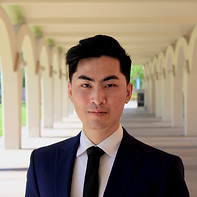
Spencer Pak
University of Nebraska at Lincoln
Spencer Pak is a Ph.D. student in the Mechanical and Materials Engineering department at the University of Nebraska-Lincoln. He earned his B.S. in Bioengineering from the University of California, Riverside. His current research focuses on fabricating liquid metal elastomer composites for use in soft robotics and wearable electronics. Under the NASA NE Space Grant Fellowship, Spencer aims to develop a new manufacturing framework for 3D printing flexible electronics in space.

Dilan Patin
University of Nebraska at Omaha
Dilan Patin earned his bachelor's degree in Biochemistry at Louisiana State University. After graduation, he served as Technical Director of the Baton Rouge Regional Eye Bank, where he helped provide transplantable corneas to restore sight to the visually impaired. He is now pursuing his master's degree at the University of Nebraska at Omaha as a member of the Rowen Laboratory. His current research focuses on identifying vulnerabilities in the antibiotic-resistant bacterium Pseudomonas aeruginosa. Dilan aspires to build a career in infectious disease research and public health, with a focus on advancing strategies to overcome antibiotic resistance.

Thomas Ramsey
University of Nebraska at Lincoln
Thomas Ramsey is an undergraduate student at the University of Nebraska–Lincoln, pursuing a B.S. in Mechanical Engineering with minors in Mathematics and Robotics. His current research, under the guidance of Dr. Sasitharan Balasubramaniam, involves developing a microfluidic device for reservoir computing. Previously, Thomas worked as an undergraduate researcher in Dr. Keegan Moore’s Moore Dynamics and Analytics Laboratory, studying nonlinear dynamical systems, and Dr. Sangjin Ryu’s Bio/Flow Lab, studying microfluidic flow behavior. Beyond the lab, he is an active member of the UNL Aerospace Club, contributing to the design and construction of rockets, satellites, and rovers.

Gabby Rizzo
University of Nebraska at Lincoln
Gabby Rizzo is a PhD student in the Genetics, Cellular & Molecular Biology program at the University of Nebraska-Lincoln. In the Weber Lab, she studies how the metabolic pathways of subsurface microorganisms can inform broader questions in bioenergy. Supported by the NASA Nebraska Space Grant Fellowship, she is investigating whether hydrogen-utilizing methanogens leave detectable biosignatures when interacting with calcium carbonate minerals, linking microbial energy production to potential markers of life. Her work contributes to the search for life beyond Earth by improving our ability to recognize microbial traces preserved in rock.

Cody Schappert
University of Nebraska at Omaha
Cody Schappert is a second-year undergraduate student at the University of Nebraska at Omaha, majoring in Chemistry and Bioinformatics. He works as a research assistant under the mentorship of Dr. Denis Svechkarev, where his research focuses on the use of fluorescent spectroscopy to measure the fluorescence of environmentally-sensitive dyes in solutions containing bacterial pathogens. Cody applies advanced analytical techniques to evaluate the resulting spectra, using machine learning approaches to identify patterns and gain insights into microbial behavior and environmental responses.
Through this work, Cody develops expertise at the intersection of chemistry, bioinformatics, and computational analysis, contributing to a growing understanding of pathogen detection and characterization. In addition to his laboratory work, he is engaged in learning advanced data analysis, experimental design, and the practical applications of interdisciplinary scientific research. Cody’s academic and research pursuits reflect a commitment to leveraging modern chemical and computational methods to address challenges in microbiology and environmental health.

Charles Ternent
Creighton University
Charles Ternent is a third-year undergraduate student studying Biology at Creighton University. He conducts research in a neuroscience laboratory under the mentorship of Dr. Shibata, focusing on the long non-coding RNA Nostrill and its role in radiation-induced inflammation. His work aims to better understand the molecular mechanisms that drive inflammatory responses following radiation exposure, with potential implications for therapies in neurological health and disease.
In addition to his research, Charles is actively engaged in developing his scientific skills through coursework, lab techniques, and collaborative projects, demonstrating a strong commitment to both fundamental and applied biological research. Outside the laboratory, he enjoys fishing, maintaining an active lifestyle through working out, and spending quality time with his family. Charles’s combined interests in biology, research, and community reflect a dedication to both scientific inquiry and personal growth.

Reid Sherman
University of Nebraska at Lincoln
Reid Sherman is a Mechanical Engineering student at the University of Nebraska–Lincoln with a longstanding interest in aerospace and space exploration. Their experience includes leadership in aerospace education, hands-on engineering projects, and research in propulsion-related systems. Reid gained early exposure to aerospace through the Civil Air Patrol, where they developed skills in mentorship, team management, and technical problem-solving.
At UNL, Reid served as Team Captain for the NASA Nebraska Antimicrobial Space Challenge, leading a multidisciplinary team to a first-place finish and overseeing project design, research, and presentations. Beyond the classroom, they are actively involved in STEM outreach, including mentoring programs and public science education initiatives that aim to inspire the next generation of engineers and scientists.
As a Nebraska NASA Student Fellow, Reid continues to pursue research in propulsion systems with the goal of developing technologies that could reduce Earth-to-Mars travel time. They aspire to a career in the aerospace industry, combining engineering expertise, leadership, and outreach, with the long-term goal of contributing to human spaceflight as an astronaut.